Understand your options
Shockwave uses acoustic pressure pulses to stimulate a response in the treated tissue. At Progress Physiotherapy, we offer both radial and focus shockwave. We consider it alongside exercise and activity guidance, with the aim of improving comfort and function so you can move your recovery forward.
Technology with a purpose
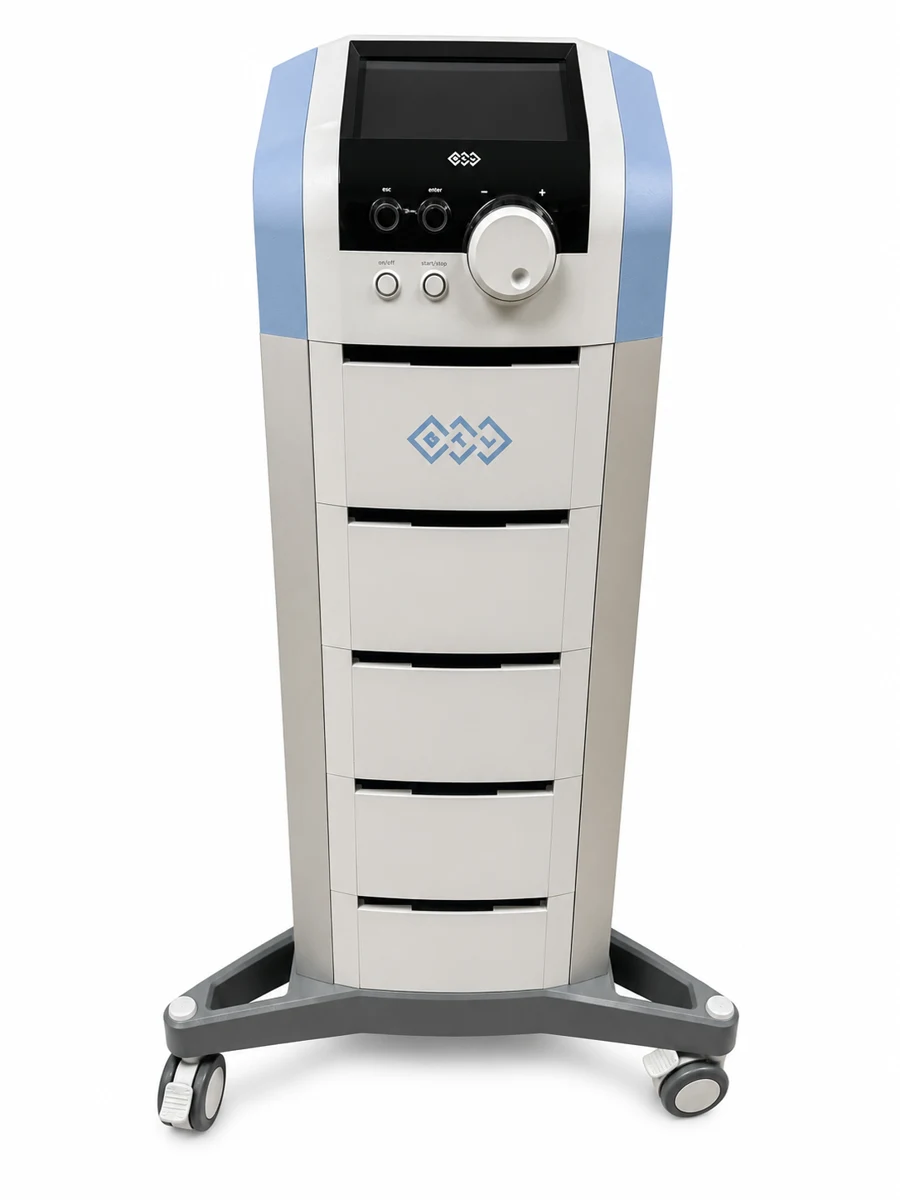
Radial and focus shockwave.
Care built around you.
Both options are available at Progress Physiotherapy. Your assessment guides which treatment, if any, fits your injury and rehabilitation goals.
Soft tissues include muscles, tendons and ligaments. Whether you are managing an ongoing tendon problem or lingering symptoms after a sprain or strain, we assess the injury and build a rehabilitation plan around your recovery. Your findings help determine whether shockwave has a useful role.
What is shockwave therapy?
A handheld applicator delivers repeated pulses through the skin to a selected area. There is no injection or incision. Despite the name, shockwave is mechanical energy, rather than an electrical shock.
It is often discussed when a tendon or heel problem keeps interfering with walking, gripping, exercise or work. Your physiotherapist first checks what is contributing to the symptoms and whether this treatment is appropriate for you.
How might it support healing?
Cells can respond to mechanical stimulation by changing their biological activity. Laboratory and animal studies of shockwave have found changes in repair-related signalling, collagen processes and the formation of small blood vessels. At Progress Physiotherapy, this research informs our understanding of how shockwave interacts with tissue and its potential role in rehabilitation.
Our commitment to evidence-informed practice means connecting this biological research with clinical evidence for your condition. We use that knowledge alongside your assessment to select treatment and track meaningful changes in pain, movement and function.
Why rehabilitation still matters
Tendons transmit muscle force, while ligaments help support joints. These collagen-rich tissues can take time to adapt after injury. Blood supply is one part of the picture; repeated overload, reduced strength, recovery time and the demands of daily life can also matter.
Rest may settle symptoms without rebuilding the capacity you need for stairs, lifting or sport. Our approach pairs suitable treatment with a gradual progression of movement and loading. The goal is to help you feel better and become better able to tolerate the activity that matters to you.
When might we consider shockwave?
- Persistent plantar heel pain, often called plantar fasciitis or plantar fasciopathy.
- Selected Achilles, patellar and other tendon presentations.
- Lateral elbow tendinopathy, commonly called tennis elbow.
- Some shoulder presentations, including calcific tendinopathy.
These are reasons to discuss an assessment, rather than a checklist of guaranteed results. Evidence differs between diagnoses—even between different types of Achilles pain. Findings in chronic tendinopathy should not be assumed to apply to a fresh ligament sprain or a torn tendon.
Radial or focus shockwave?
Radial shockwave
Pressure waves spread outward from the applicator, with their greatest pressure close to the surface. This can suit a broader, more superficial treatment area.
Explore radial shockwave →Focus shockwave
Acoustic energy converges within a selected focal region. This provides a different way to target tissue, including some deeper locations.
Explore focus shockwave →Having both options gives your physiotherapist flexibility. For a very irritable presentation, we may first focus on comfort and activity tolerance; high-power laser may be considered when shockwave would not yet be well tolerated. If shockwave later fits the diagnosis, radial treatment may suit a broader, superficial target, while focused treatment can reach a selected deeper target. This is a clinical decision, not a required sequence: selection depends on the evidence for your condition, tissue location, stage of recovery and tolerance. You do not need to choose a machine when booking.
How it fits into your rehabilitation plan
- Assess and set a starting point. We discuss your history and check relevant movement, strength and everyday tasks.
- Choose treatment together. We explain why shockwave may be useful, what it may feel like and the alternatives.
- Build capacity between visits. Your plan includes an appropriate progression of exercises and guidance on activity.
- Review what changes. We look at symptoms and meaningful tasks, then continue, modify or stop a treatment according to your response.
For example, a heel-pain plan might track how comfortably you take your first morning steps and how far you can walk, alongside a tailored strengthening program. A brief reduction in pain is useful, but lasting progress also means doing more.
What does a session feel like?
The applicator is placed against the treatment area, usually with coupling gel. You may feel repeated tapping or a deeper ache. Tell your physiotherapist how it feels so the settings can be adjusted. Temporary soreness, redness or bruising can occur.
Tell us about blood-thinning medication, bleeding conditions, pregnancy, implanted devices, recent procedures and other health concerns. Suitability depends on your history, the treatment area and the settings. We will also explain activity guidance after treatment.
Technology within your care
Both types of shockwave are available as part of your physiotherapy care. Your first assessment includes treatment on the same day; the assessment determines which treatment is suitable. View fees and insurance information.
Your questions, answered
How many sessions will I need?
Your physiotherapist will discuss a proposed course and when to review it. The number and spacing depend on your condition and response. We do not promise a fixed number of visits or require you to select a shockwave package before assessment.
Will it heal my injury faster?
Supporting an efficient recovery is our goal. We combine evidence-informed treatment with progressive rehabilitation and monitor your response. Your condition, stage of recovery and progress guide the treatment plan and expected timeline.
Can I keep exercising?
Usually your rehabilitation includes activity, but the amount and intensity need to suit your presentation. Your physiotherapist will explain what to continue, modify or pause and how to progress.
What if shockwave is not right for me?
We can build a plan using other options, including exercise, activity guidance and hands-on care. Technology is selected for a clinical reason and with your agreement.
Research & further reading
Advanced options. Experienced clinical judgement.
At Progress Physiotherapy in West Kingston, focused and radial shockwave and high-power Class IV laser are available within your physiotherapy care. Your clinician draws on experience, current evidence and your assessment to choose the appropriate technology alongside exercise and hands-on treatment. These options are available as part of your physiotherapy care.